

A wine press, a spinning wheel, churns, a Salernes tile press… At the Bastide de Tourtour, a collection of old tools brings to life what life was like in the countryside of Provence and France in days gone by. Well worth a visit this autumn, between walks around the hilltop village.
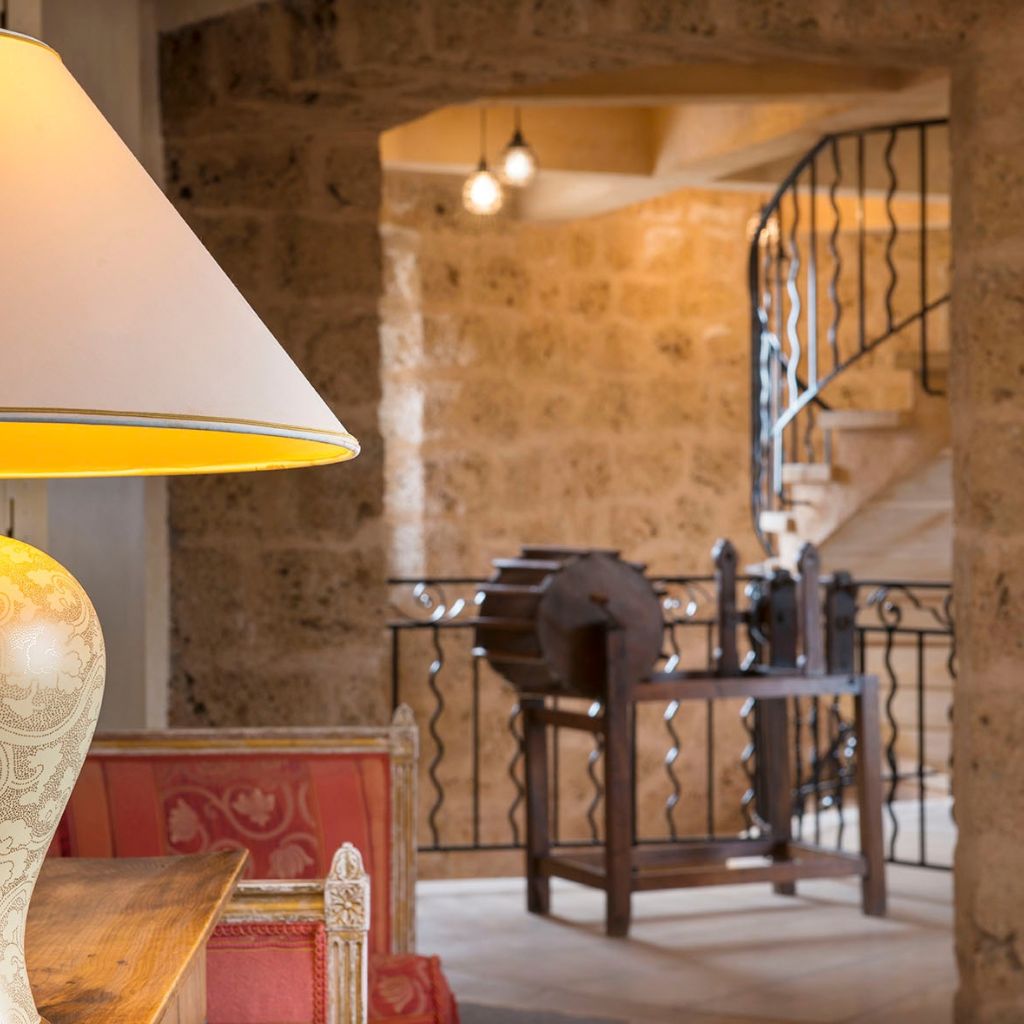
Step through the door of the Bastide de Tourtour and take a moment to look around you. In the hall, at the foot of the grand staircase, and then all the way up the stairs, on each floor up to the second, An astonishing collection of vintage machines awaits curious visitors.
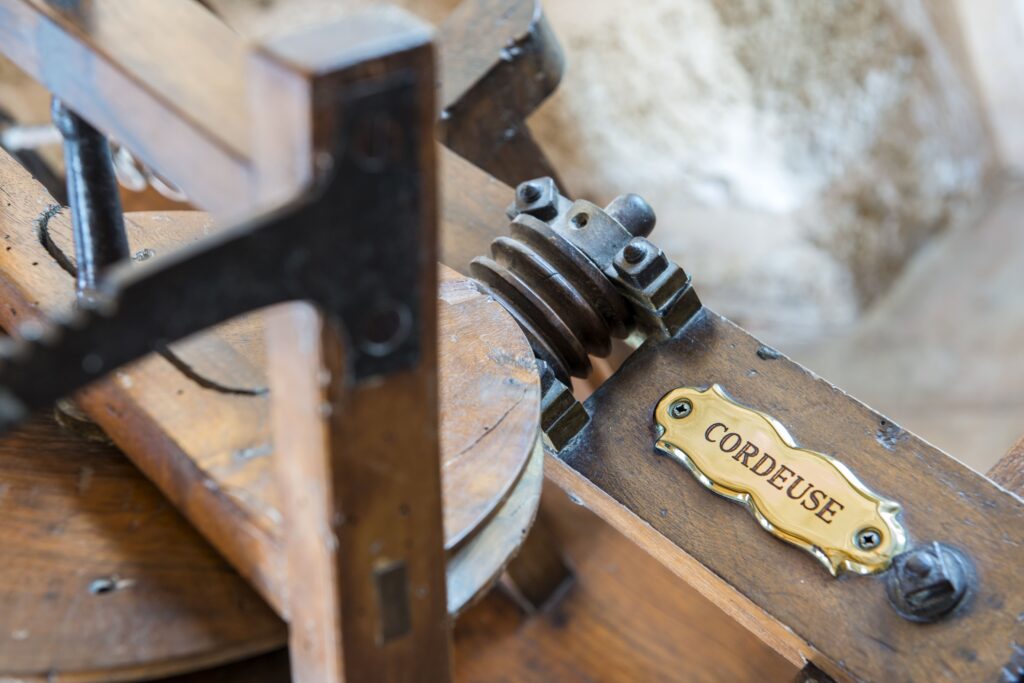
Each piece has its own small brass plaque. Each one tells the story of a trade, a season, or a skill passed down from one generation to the next.
A Provençal country house – originally a farmstead
Before becoming a place where people come to recharge their batteries, a bastide was first and foremost a farmstead. People would sow, harvest and process the fruits of their labour there themselves.
These old tools remind us of a time when self-sufficiency was a way of life. Today, they form a veritable mini-museum of rural heritage, offering a glimpse into the daily lives of our ancestors.
Autumn, the season of harvests and grape-picking
At this time of year, certain items from the collection take on their full meaning again.
The wheeled wine press brings to mind the grape harvest, when the grapes were taken from the vineyard to the vat.
The sower reminds us that winter wheat was sown in the autumn.
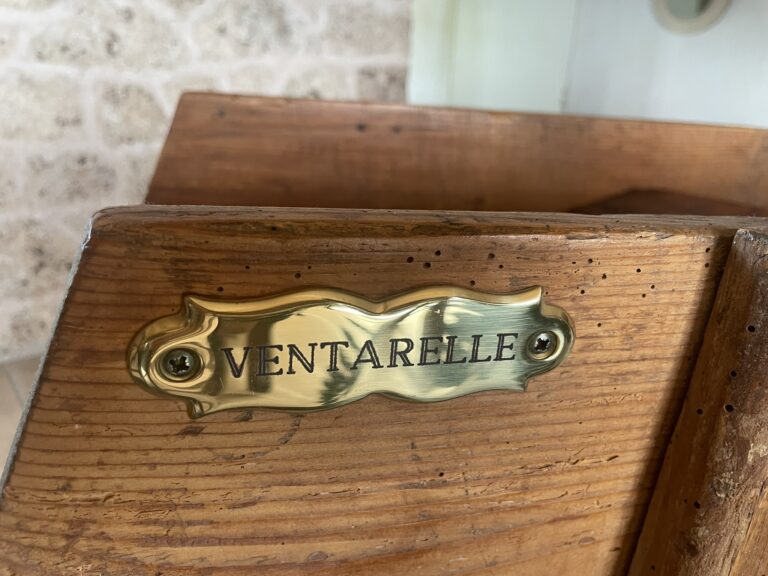
La Ventarelle, lovely noun with a Provençal flavour, separated the grain from the chaff once the harvest was in, using a hand-cranked fan.
The Peugeot Frères grain mill and the buckwheat mill then received the grain.
Because this collection brings together objects who have come from all over France. The wine press in Saint-Nectaire comes straight from Auvergne. The cabbage cutter comes from Alsace, where sauerkraut used to be prepared for the winter. In the dairy, two churns were turning cream into butter by hand.
Winter evenings: spinning, weaving, sewing
As the days grew shorter, work moved to the hearth. It was the season for yarns and fabrics, and each machine had its own role:
The hemp-shredding machine broke up the stalks to extract the fibre.
The carding machine was untangling the wool.
The spinning wheel was spinning the yarn.
The reel and the bobbin-winding machine prepared it for weaving.
The rope-maker, for her part, made the ropes that were essential on the farm.
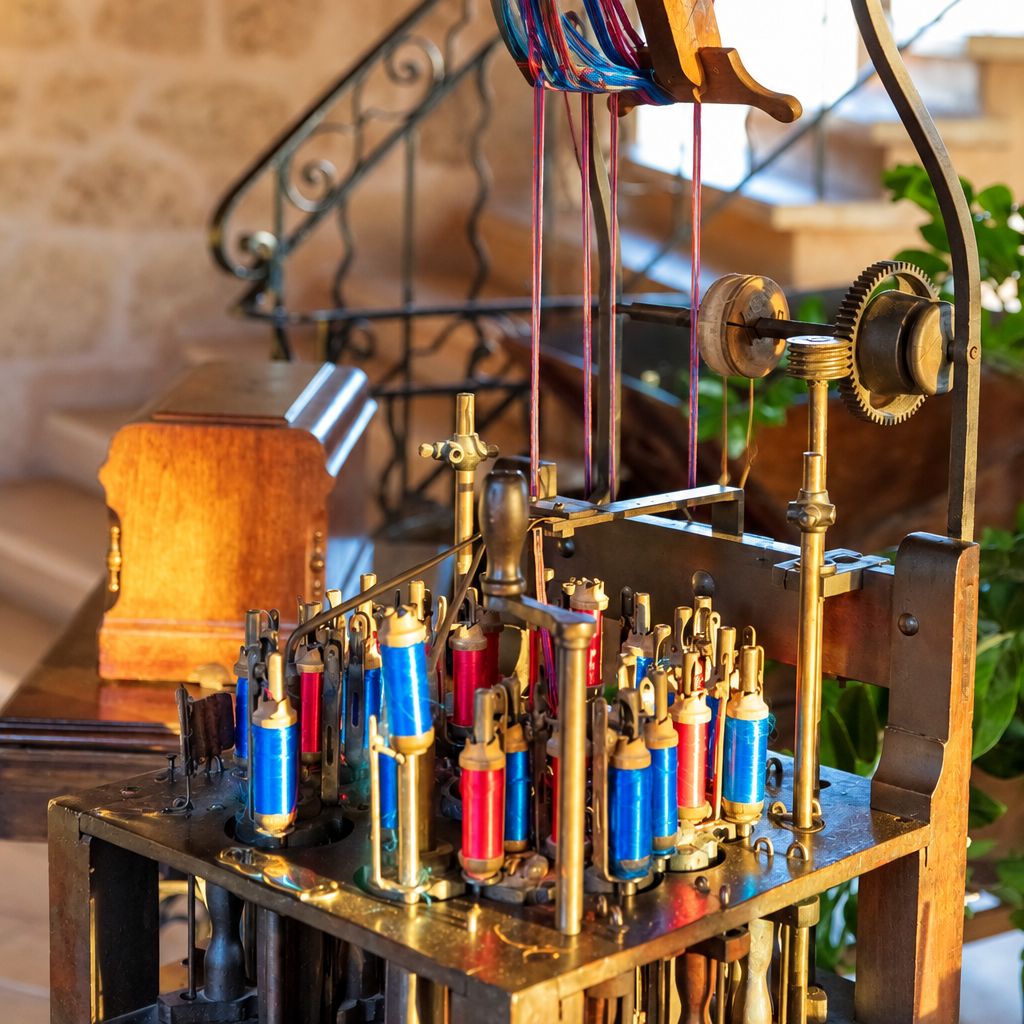
Other pieces are more refined. The ribbon-weaving machine, dating from the 19th century, still has its spools of red and blue silk. The glove-maker’s workbench evokes the tradition of Grasse’s glove-makers. Finally, the elegant Pfaff foot-powered sewing machine stands out for its ornate cast-iron base.
The estate’s workshop: maintaining tools
The tools also needed looking after. The foot-powered grinding wheel and the knife sharpener restored the blades’ sharpness. The workbench with a vice and the bar-top bench were used for working on the wood, whilst the forge bellows fanned the blacksmith’s fire.
The draught horse’s collar serves as a reminder that the animal was the farm’s first working companion.
The little pleasures of everyday life
Other appliances evoke a sense of indulgence and conviviality: the salt mill, the coffee roaster used to roast beans at home, or the tobacco cutter for the evening’s pipe.
As for the wine, the cork-cutting machine and the bottle-corking machine take us back to the Var region. The cork was, in fact, harvested in the Massif des Maures, a few dozen kilometres from here.
The Salernes brick press: a treasure of the Var’s cultural heritage
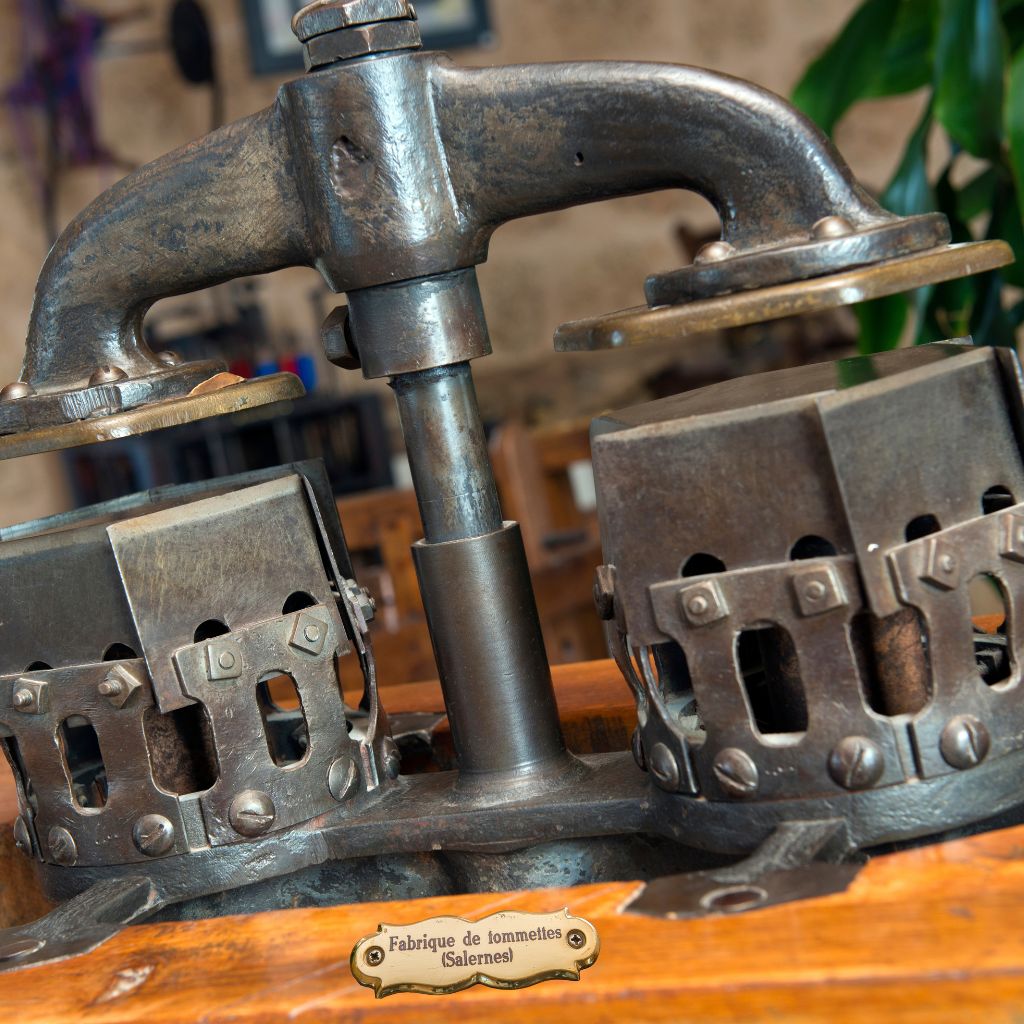
Of all these pieces, one stands out as particularly special: the Salernes brick press.
About twenty kilometres from Tourtour, Salernes is the Provençal capital of terracotta. It was here that the famous red tomettes – which still adorn so many houses in Provence – were moulded in hexagonal moulds like those in this press. A piece of our local heritage, on display in the heart of the Bastide.
What’s on in Tourtour this autumn? A journey through time
This autumn and winter, whilst out for a stroll in the village of Tourtour and for a moment of relaxation, treat yourself to this short tour. Read the information plaques, look at the cogs, and try to work out the movements.
Children love trying to work out what each machine was used for. The older ones often remember seeing one at their grandparents’ house. It’s like a journey back in time, without ever leaving La Bastide.
Frequently Asked Questions
Where is the Bastide’s collection of antique tools kept?
The machines are on display in the hall, at the foot of the grand stone staircase and extending into the shop at the Bastide de Tourtour.
What is a ventarelle?
It is a piece of agricultural machinery that separated the grain from the straw after the harvest, using a hand-operated fan.
What are Salernes tomettes?
These are tiles made of earth red, hexagonal terracotta tiles, made in Salernes, the Provençal capital of terracotta, situated some twenty kilometres from Tourtour.
Where do the items in the collection come from?
From all over France: the wine press in Saint-Nectaire comes from Auvergne, the cabbage cutter from Alsace, and several items are linked to the Var region, such as the tile press and the cork-cutting machine.